Reitmans: The Store Our Mothers Shopped At Grew Up. So Did We.
For a generation of Canadian women, Reitmans was once shorthand for “where my mom shops.” Twenty years later, many of us are the moms—and somehow, Reitmans has become on our radar to shop at.
There was a time when Reitmans belonged firmly in the category of stores I associated with adulthood, and not the version of adulthood I was particularly eager to reach.
You know the one. Sensible pants. Practical blouses. The sort of place your mother disappeared into at the mall while you wandered off in search of something lower-rise, tighter and considerably less “frumpy”.
The irony, of course, is that I knew Reitmans better than most teenagers did.
At 19, I was hired as a sales associate at my small-town Reitmans. I was broke, navigating early adulthood, and still working out what I wanted my life to look like. What I thought would simply be a retail job ended up teaching me far more than how to fold sweaters to exact specifications with a plastic folding board—IYKYK.
It was where I first started understanding brand identity in a tangible way, how a store tells you who it is before anyone says a word. I learned about retail buying and why certain trends arrived on our racks while others didn’t. I learned how women actually shop, as opposed to how magazines tell us they shop. And I learned customer service in its truest form: listening to someone, understanding what she needed, and helping her feel good when she walked out the door.
More importantly, I worked alongside women nearly 20 years my senior who had an enormous influence on me. They offered career advice before I really had a career. They believed in me, and pointed out strengths I hadn’t yet learned to recognize in myself.
Looking back, Reitmans gave me a platform to begin becoming the woman I am now, and in a roundabout way, helped shape the career I eventually built. Which makes its current transformation feel strangely personal.
We became the women we used to call “grown-ups”
I’m turning 40. Typing that still feels slightly surreal, largely because 40 bears very little resemblance to the version of 40 I imagined when I was 19. Yes, many of us are mothers now. We have mortgages and school calendars and opinions about throw pillows. We have also lived through enough fashion cycles to know that if you keep something long enough, somebody on TikTok will eventually deem it “in” again.
What we haven’t done is quietly accept the antiquated idea that reaching a particular birthday requires surrendering our interest in fashion. There remains a remarkably persistent strain of advice directed at women about how to “dress your age.” Hemlines should descend. Trends should be approached cautiously. At some undefined point, apparently, personal style is expected to become increasingly discreet. Millennial women, from what I’ve seen on the whole, do not seem especially interested in that concept.
We may not be dressing exactly as we did in 2004 —I mean, thank god!— but that doesn’t mean we’ve stopped wanting clothes with personality. Our style has simply become more considered. We know ourselves better. We understand proportion. We know the difference between a trend that belongs in our wardrobe and one that will be on Poshmark in six months. Refinement is not the same thing as retreat. And Reitmans seems to understand that distinction.
Reitmans, reconsidered
The most interesting thing about the new Reitmans isn’t that it is trying to appear younger. It isn’t. It feels more like the brand has finally caught up with the women who grew up around it.
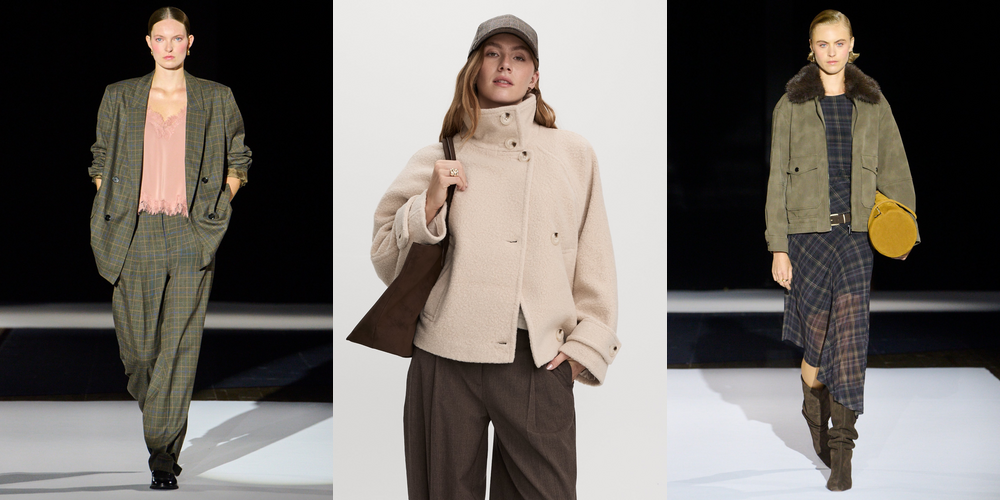
As Reitmans marks its 100th year in 2026, the company has introduced a new visual identity, refreshed its stores, and invested further in its digital experience, all as part of a broader attempt to reposition the century-old Canadian retailer for its next chapter. The clothes reflect that shift.
There are still the pieces Reitmans has always done well, such as trousers that actually need to function through a workday, knits you can reasonably wear more than twice, clothes designed with the radical concept that women have bodies and lives. But now they sit alongside sharper tailoring, better denim, stronger colour, interesting proportions and pieces that feel informed by fashion without looking as though someone simply copied whatever happened on a runway six months earlier. And that distinction is what sets the new Reitmans apart from the old one.
The genius isn’t in convincing a 40-year-old woman she should suddenly dress like a 25-year-old. It’s recognizing that the 40-year-old woman was never asking to disappear in the first place.
The branding finally has a personality, too
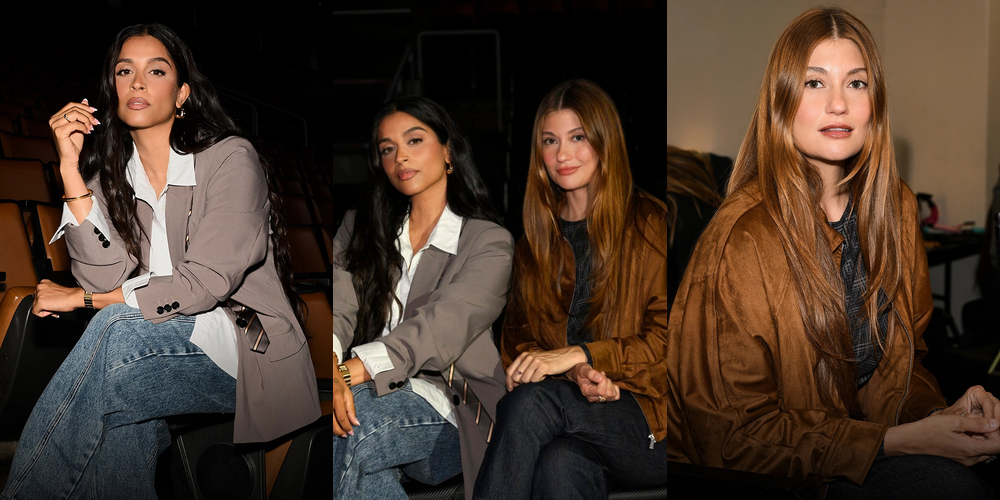
For Fall 2026, Reitmans named Lilly Singh and Katherine Levac as national ambassadors. It’s a smart choice. They are funny, self-aware, and recognizable in a way that feels refreshingly human. Reitmans has said the campaign is meant to make the brand more expressive, culturally connected. and reflective of women’s lives today, and this casting does exactly that.
Fashion advertising has traditionally sold women a fairly narrow version of aspiration: beautiful, polished, composed. Singh and Levac offer something more interesting. They have careers, opinions, humour. and personality, and they can look incredible without suggesting that looking incredible is the most important thing about them. And that is so reflective of woman at this age. By 40, most of us have enough perspective to be less interested in performing perfection. We still care about the coat, but we’re ok with laughing at ourselves while wearing it.
That same shift is visible across the brand more broadly. Reitmans’ social presence feels livelier, its partnership with the Toronto Tempo gives it a stronger connection to women’s culture, and its campaigns now feel more editorial and personality-led than purely product-focused. The result is a brand that feels more plugged into how women actually live now, rather than one standing slightly outside of culture trying to sell clothes into it.
Sometimes an institution needs an outsider
There has also been a less visible, but arguably more consequential, change. In 2023, Andrea Limbardi became the first non-family CEO in Reitmans’ then 97-year history. Before joining the company, she had spent more than two decades in retail, including leadership experience spanning merchandising, marketing, e-commerce, operations and customer experience.
For a family business with nearly a century of history at the time, handing leadership to someone outside the family was not a minor symbolic gesture. It may also prove to have been one of its smartest.
Her arrival did not require Reitmans to abandon what made it successful. Quite the opposite. The brand still understands its customer, still values accessibility and still makes clothes for women with actual places to go. What appears to have changed is the willingness to reconsider how that customer wants to see herself. Sometimes preserving a legacy means protecting everything exactly as it was, and sometimes it means knowing what to let go.
Coming full circle
I doubt the 19-year-old version of me, standing beneath the fluorescent lights of my little Reitmans store, would have imagined writing about the company more than 20 years later.
She certainly wouldn’t have believed me if I told her she’d eventually be voluntarily browsing the new arrivals. But perhaps that is what makes the story work. Reitmans grew up alongside the women who once thought it belonged to their mothers.
We traded ultra-low-rise denim for better-cut trousers, although, to be clear, I reserve the right to revisit a low rise if the outfit calls for it. We learned that a great blazer is not boring. We started paying more attention to fabric and fit. We became less interested in buying an entirely new identity every season and much more interested in building wardrobes that look like our own.
We became more refined, not less interested. And somewhere along the way, Reitmans seems to have done the same.
There is something rather satisfying about returning to a place you once associated with the woman you thought you might become and discovering that neither of you turned out quite as expected. At 19, Reitmans gave me one of my first opportunities to figure out who I might be professionally. At 40, I find myself looking at the brand through an entirely different lens, not simply with nostalgia, but with genuine curiosity about where it goes next.
We didn’t suddenly become the women Reitmans was always designed for. Reitmans evolved with us, and that may be the smartest part of its reinvention.