Why Okanagan Wineries Need to Tend Their Social Media as Carefully as Their Vines
Of all the things an Okanagan winery can no longer afford to treat as optional, social media may be the most misunderstood.
A bottle shot dropped onto the grid every two weeks is not a strategy. Neither is the occasional photo of the winemaker, or a sunlit vineyard posted once a month with no greater story holding it all together. Too many wineries in the Okanagan are still using social media passively—sporadically, visually, and without any real consistency in tone, message, or mood. And in a region as naturally breathtaking as this one, that is a missed opportunity. The light is lovely, yes. The landscape begs to be photographed. But pretty content alone is not enough. Without a cohesive identity behind it, social media becomes a collection of disconnected images rather than a brand people remember.
And right now, being memorable matters more than ever.
The Okanagan wine industry is still moving through the aftermath of an extraordinarily difficult period, with wineries feeling the financial and emotional impact of vine loss, uncertainty, and tighter budgets. Which is precisely why social media marketing should be treated as an essential tool, not a side project. When times are lean, visibility matters. Relevance matters. Staying top of mind matters. If customers are not walking through your doors as often, then your digital presence has to work even harder for you.
Because social media is no longer just a place to post updates. It is where people discover brands, decide whether they feel connected to them, and quietly determine whether they want to buy in.
For wineries, that means the feed cannot feel random. It cannot be a mix of one bottle photo, one vineyard shot, one event graphic, and then silence for three weeks. A strong social media presence should feel intentional from the moment someone lands on the page. The visuals should make sense together. The captions should sound like they came from the same voice. The messaging should reflect a clear understanding of who the winery is, who it is speaking to, and what kind of world it wants to invite people into.
That is where cohesion comes in—and it is what so many brands are still missing.
A cohesive social media presence does not mean every post looks identical or overly polished. It means there is a recognizable point of view. It means the winery has decided what it wants to be known for, and then reinforces that identity again and again through imagery, language, pacing, and tone. Maybe that identity is elegant and heritage-driven. Maybe it is playful and contemporary. Maybe it is warm, refined, and quietly luxurious. Whatever it is, it has to be clear. Because when social media feels cohesive, it builds trust. It builds familiarity. And most importantly, it builds desire.
Saintly is a strong example of this done well. Their Instagram is aesthetically pleasing, yes, but more than that, it feels authored. It is fresh and feminine, cheeky and modern, and it plays directly to its audience. They are not simply posting wine; they are selling a lifestyle, a mood, a story. That is what makes the brand feel alive. The feed is not there to fill space—it is there to create a feeling. And that feeling is what makes someone stop scrolling, pay attention, and begin to associate the brand with a certain kind of taste and experience.
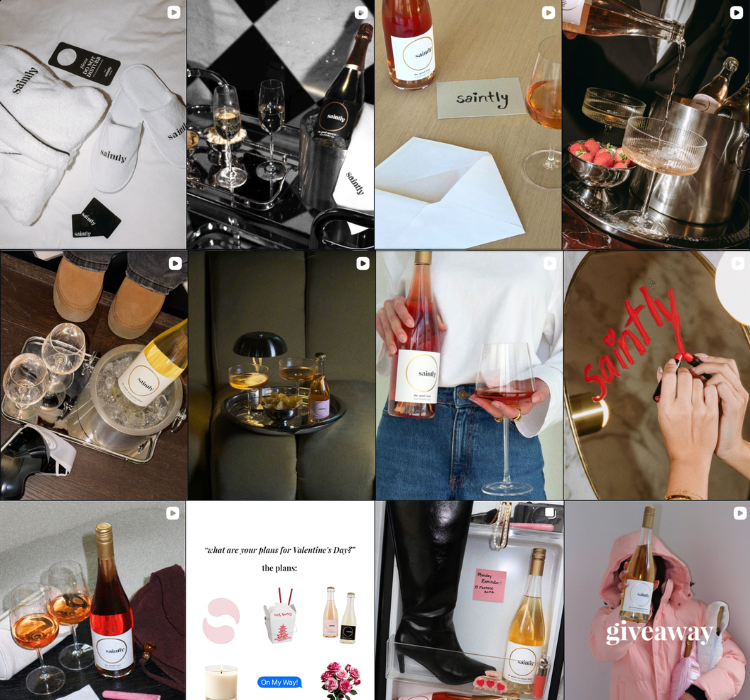
Saintly Instagram feed
That is the difference between posting and marketing.
I’m still seeing too many wineries treating Instagram like a bulletin board rather than a brand platform. A new release gets announced. An event flyer goes up. A scenic photo appears. Then nothing. There is no rhythm, no narrative, no larger sense of identity connecting one post to the next. The account may technically be active, but it is not working very hard. And in a market where consumers are making snap judgments in seconds, inactive energy reads as forgettable.
This is why investing even a modest monthly amount into social media marketing can make an enormous difference. Spending $1,500 a month on content, strategy, copy, photography, or management may feel like a stretch, especially right now—but compared with the cost of being invisible, it is often money exceptionally well spent. Good social media marketing is not just about “looking nice.” It helps shape perception, strengthen loyalty, increase engagement, and drive actual buying decisions. It gives a winery a presence beyond the tasting room. It keeps the brand in circulation, in conversation, and in mind.
I have seen firsthand how powerful this can be through work I’ve done for a few iconic wineries in the Okanagan—brands with very specific voices and tones that understood the value of consistency. Their feeds were cohesive because the thinking behind them was cohesive. Every visual, every caption, every campaign felt aligned. Nothing was random. And that kind of clarity has a cumulative effect: it makes a brand feel polished, recognizable, and worth paying attention to.
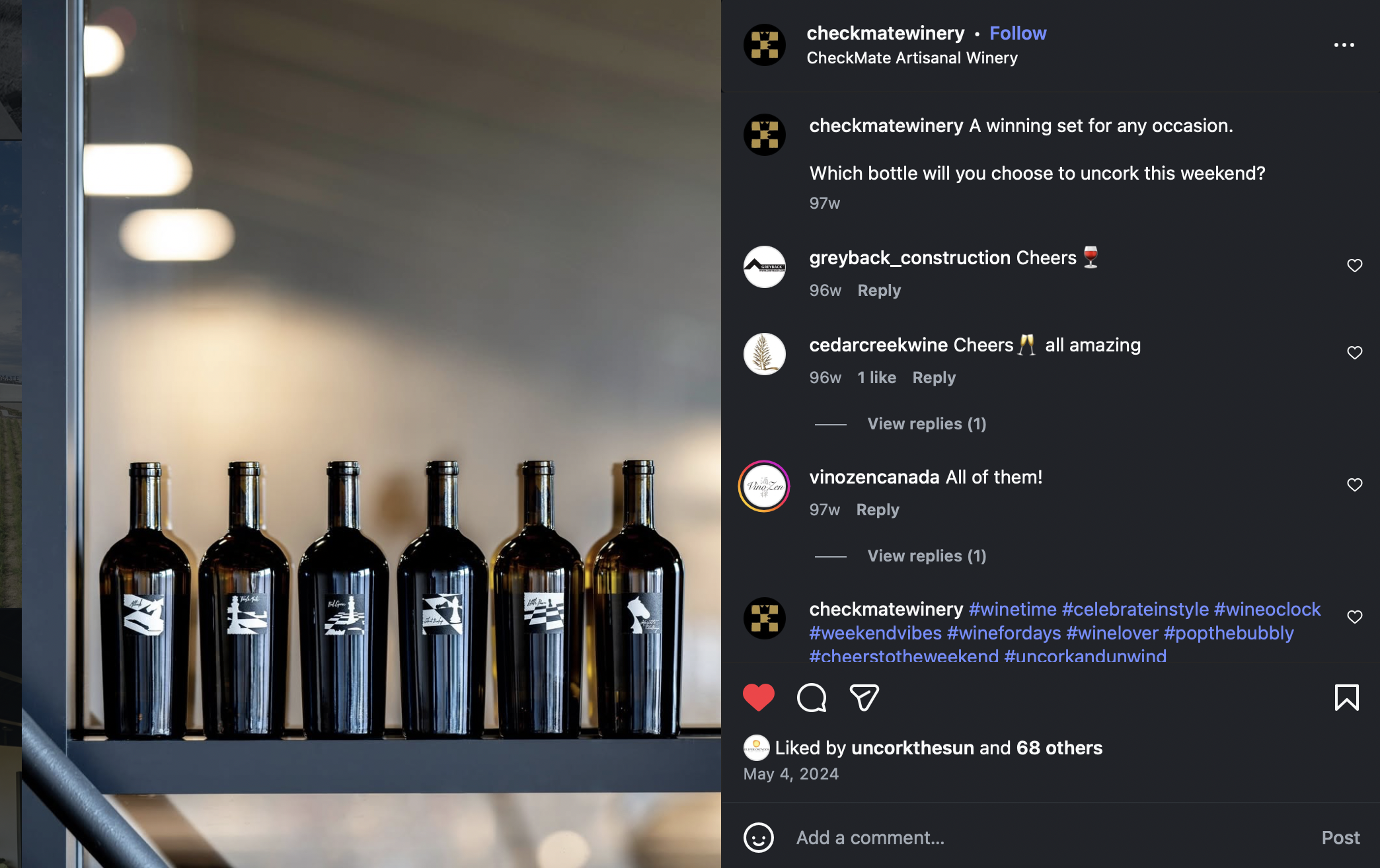
Checkmate Winery
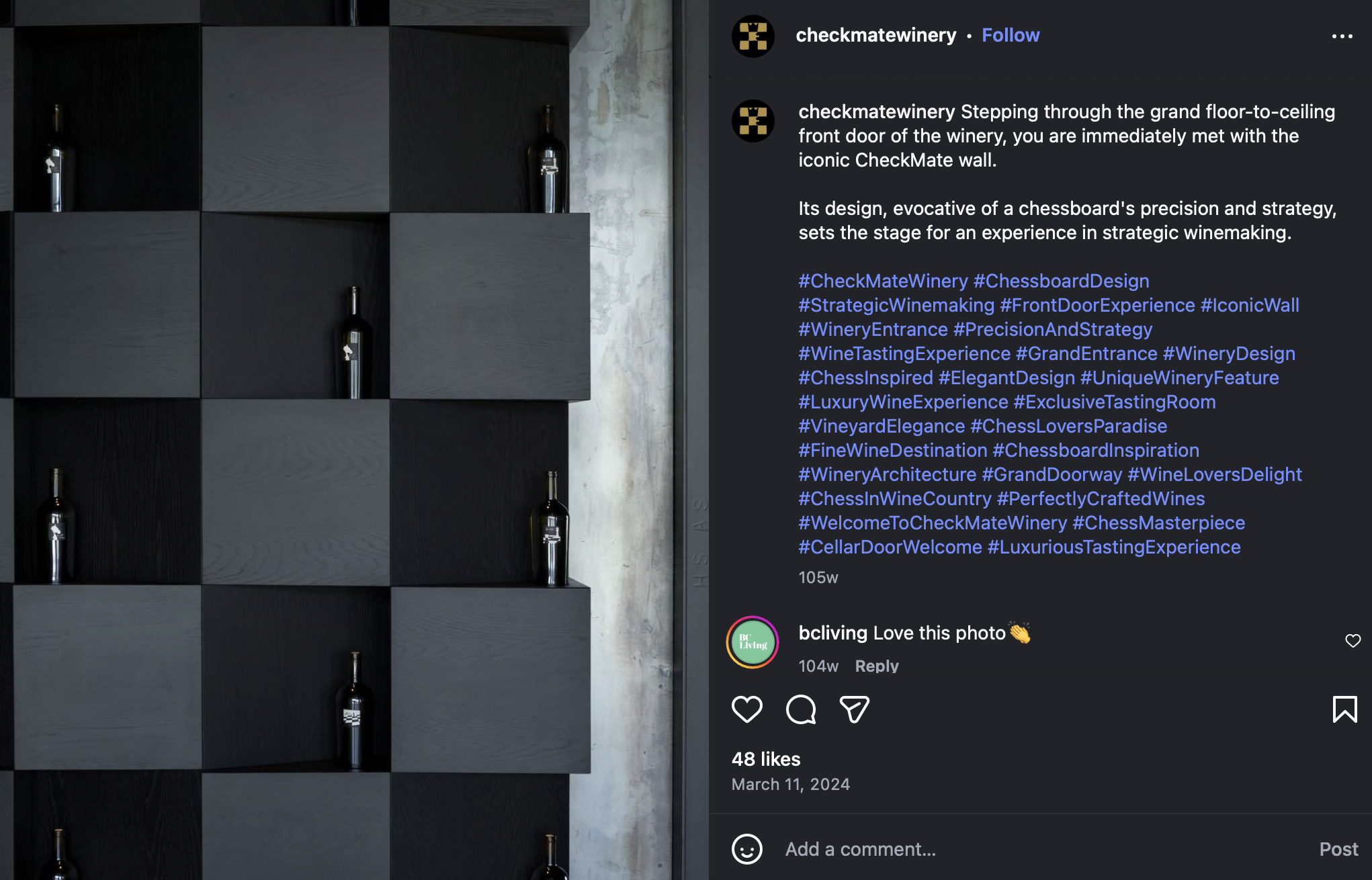
Checkmate Winery
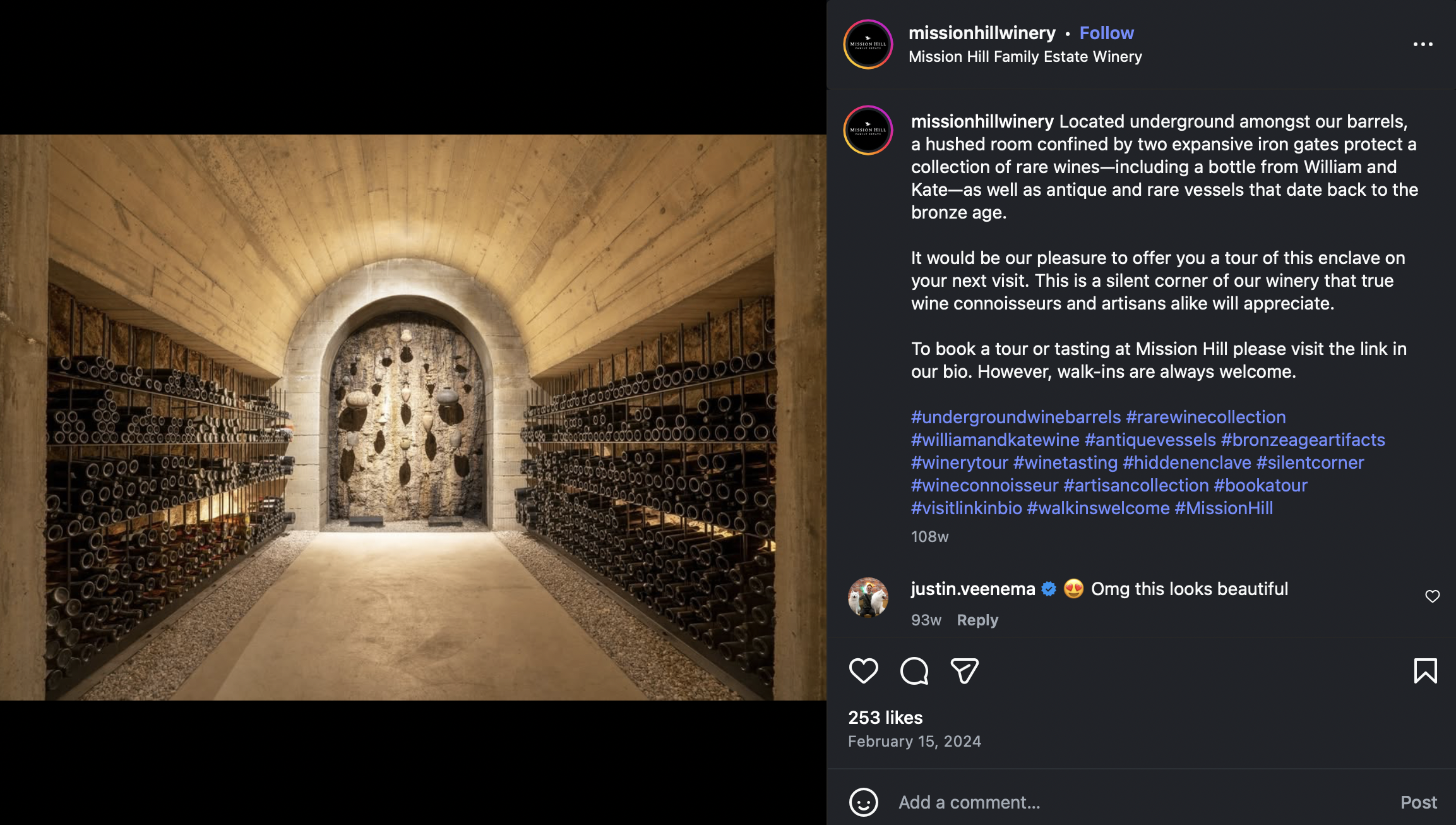
Mission Hill Winery
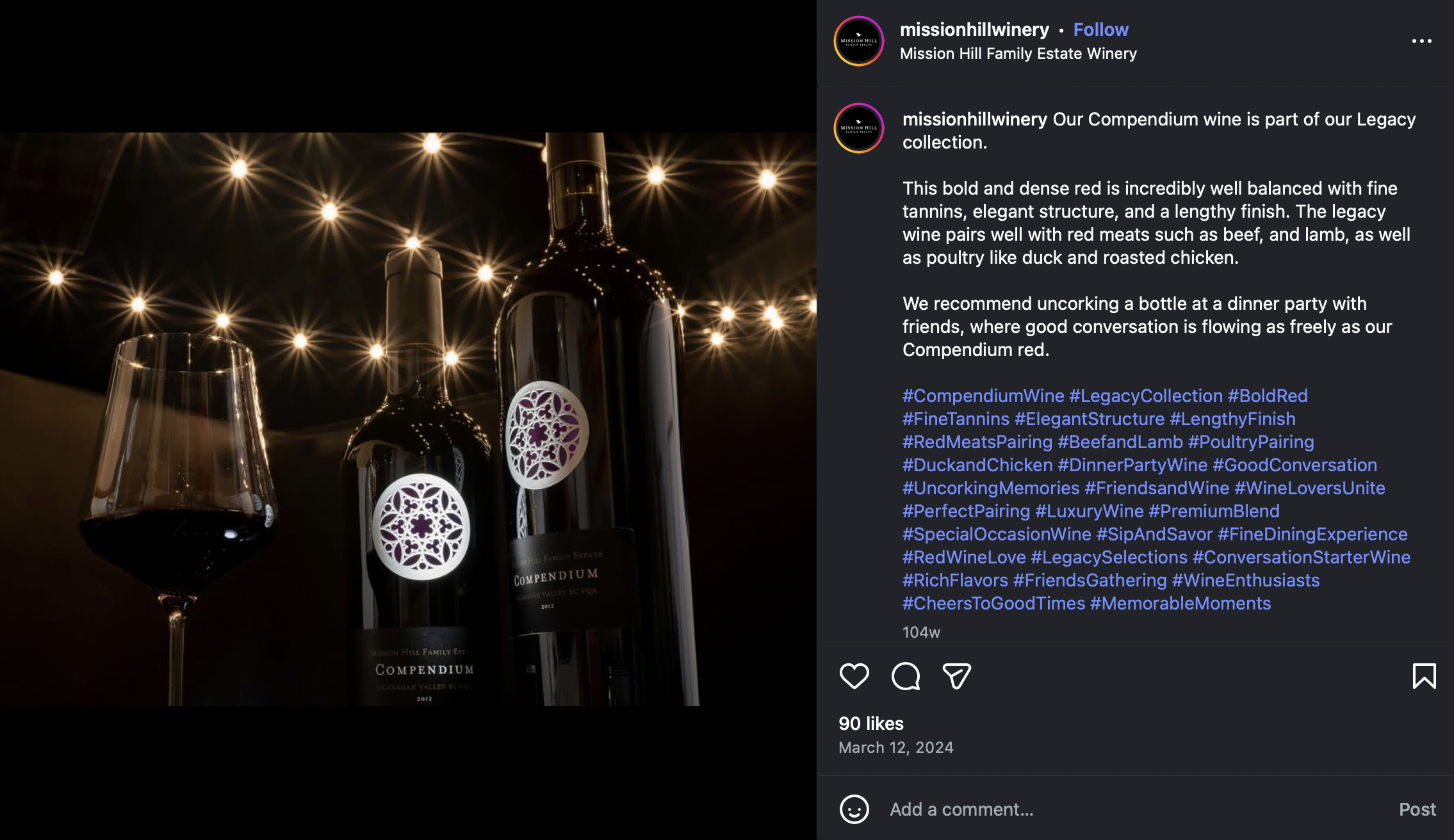
Mission Hill Winery
The wineries that will stand out in the next chapter of the Okanagan wine story will not simply be the ones producing beautiful wine. Plenty already are. They will be the ones that understand that social media is not an afterthought to the brand—it is one of the clearest expressions of it.
And in a region with so much beauty already built in, a distinct point of view—much like a good glass of wine—is what lingers.